The pairing guide
A place at the table.
KOYU is washed with Wagyu, and it keeps what the fat leaves behind: a delicate buttery richness, a subtle savoury complexity, a clean, lingering finish. A spirit like that belongs beside a plate, not only before or after one.
Nine pairings follow, in three parts. Each gives the reason it works and the way to pour.
Three principles
Fat, salt and cold
- 01
Fat meets fat
The buttery texture in the glass comes from Wagyu tallow, so it settles easily beside anything marbled or oily: beef, fatty tuna, roe, aged cheese. Then the clean finish lifts the richness away, ready for the next bite.
- 02
Salt sharpens
Salt softens the bitter edge of alcohol. Beside brine, cure or soy the spirit tastes rounder and its finish reads cleaner, which is why oysters, caviar and a well-salted crust all flatter the glass.
- 03
Cold keeps it clean
Serve at about 7°C and pour small: 25ml is one UK unit, and enough to sit beside a plate. Much colder and flavour closes down; much warmer and the alcohol leads.
Every pairing is marked one of two ways.
- Echo
- Like with like. The plate repeats something already in the glass: fat, savoury depth, a silky texture.
- Contrast
- Opposites. The plate brings what the glass does not: brine, acid, heat or bitterness.
Wagyu
The flavour in the glass, met again on the plate. Wagyu is rich, so portions stay small, and so does the pour.
The beef
Wortley Wagyu
The beef on this page is from the family's own farm in the South Yorkshire countryside: Japanese Black cattle, slow grown and grass-fed to maturity, sold from the farm shop and online. The cuts below are named as the farm sells them.
Order the beef (opens in a new tab)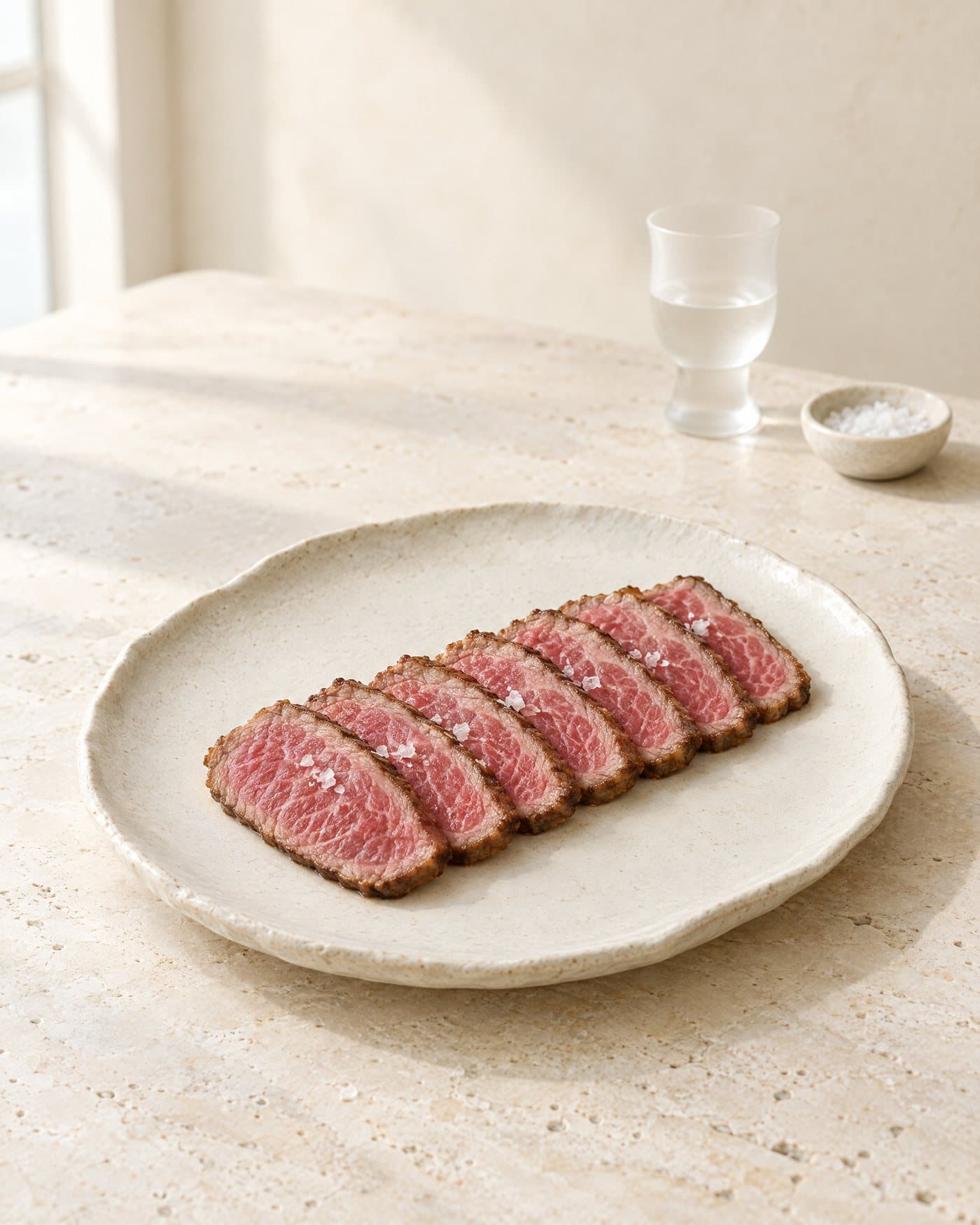
- 01Echo
Wagyu tataki
Seared hard, chilled, sliced thin. Salt, or a little ponzu.
The closest echo in the guide: the buttery note in the glass comes from the same fat that marbles the plate. Served cool, the beef stays delicate enough for the spirit’s savoury side to show, and the clean finish lifts the fat before the next slice.
- The cut
- Sirloin, or fillet for a leaner slice
- How to pour
The Koyu serveNeat · 7°C
A sip after each slice, rather than with it.
- 02Echo
Wagyu tartare
Hand-cut, lightly seasoned, an egg yolk on top.
Raw beef and yolk are all softness, and the spirit’s silky texture meets them in kind. What the plate lacks is an edge, so this is one for the martini: dry vermouth and lemon oil bring the lift a tartare is always seasoned towards.
- The cut
- Fillet, hand-cut
- How to pour
The martiniStirred · Very dry
Very dry, so the vermouth seasons rather than leads.
- 03Contrast
Sirloin, simply grilled
Well salted, grilled over high heat, rested, sliced.
A contrast of temperature: hot, charred fat against a cold, clean spirit. The salt crust sharpens the finish, and each cool sip resets the palate so the richness never builds.
- The cut
- Sirloin, or picanha for a table
- How to pour
Over iceOne large cube
The cube melts slowly, which suits a plate that takes its time.
From the sea
Brine, cure and oil. This is the company vodka has long kept at the table, and the salt does much of the work.
- 04Contrast
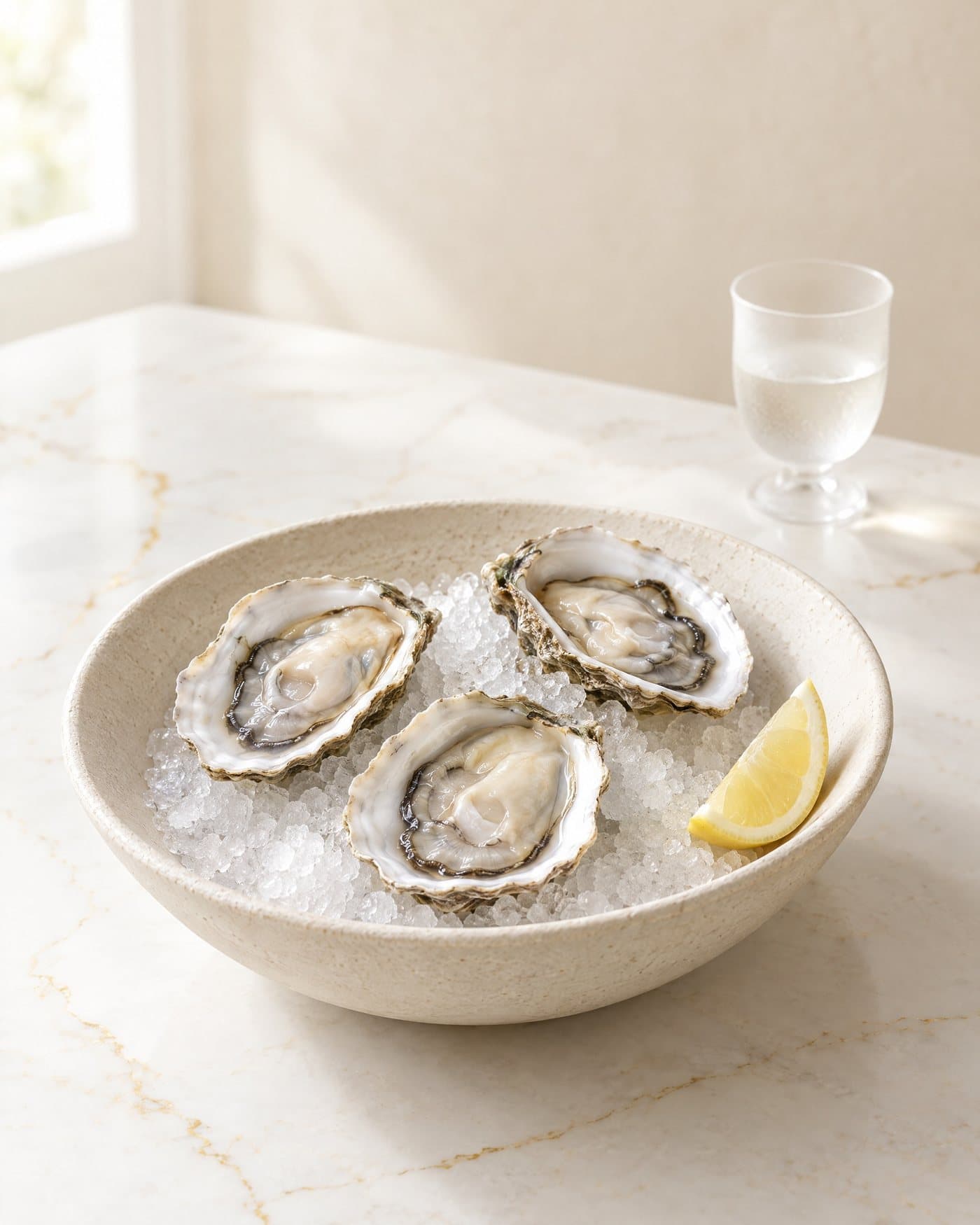
Oysters
Opened to order, on ice, with lemon or nothing at all.
Lean, mineral and briny against a spirit that is round and buttery: this one works by contrast. The brine seasons the glass as it would a dish, and the savoury note the two share is where they meet.
- How to pour
The martiniStirred · Very dry
The lemon oil from the twist stands in for the wedge.
- 05Echo
Caviar and blinis
Warm blinis, crème fraîche, a mother-of-pearl spoon.
The classic, because a cold, clean spirit clears the palate between spoonfuls without laying another flavour over the roe. KOYU adds a buttery texture that matches the fat of the eggs and the crème fraîche, while the salt of the cure keeps its finish sharp.
- How to pour
The Koyu serveNeat · 7°C
Tradition pours vodka from the freezer. This one shows more at 7°C.
- 06Echo
Sashimi and nigiri
Fatty tuna, salmon, yellowtail.
Oily fish is marbled much as the beef is, and the spirit’s buttery weight follows it in the same way. Soy and fish already carry the savoury note the spirit has, so nothing jars; lean white fish is quieter, and wants a smaller sip.
- How to pour
The Koyu serveNeat · 7°C
Poured small. It is 40% ABV, not sake.
To finish
Three small things to close a meal, and a last, short pour.
- 07Echo
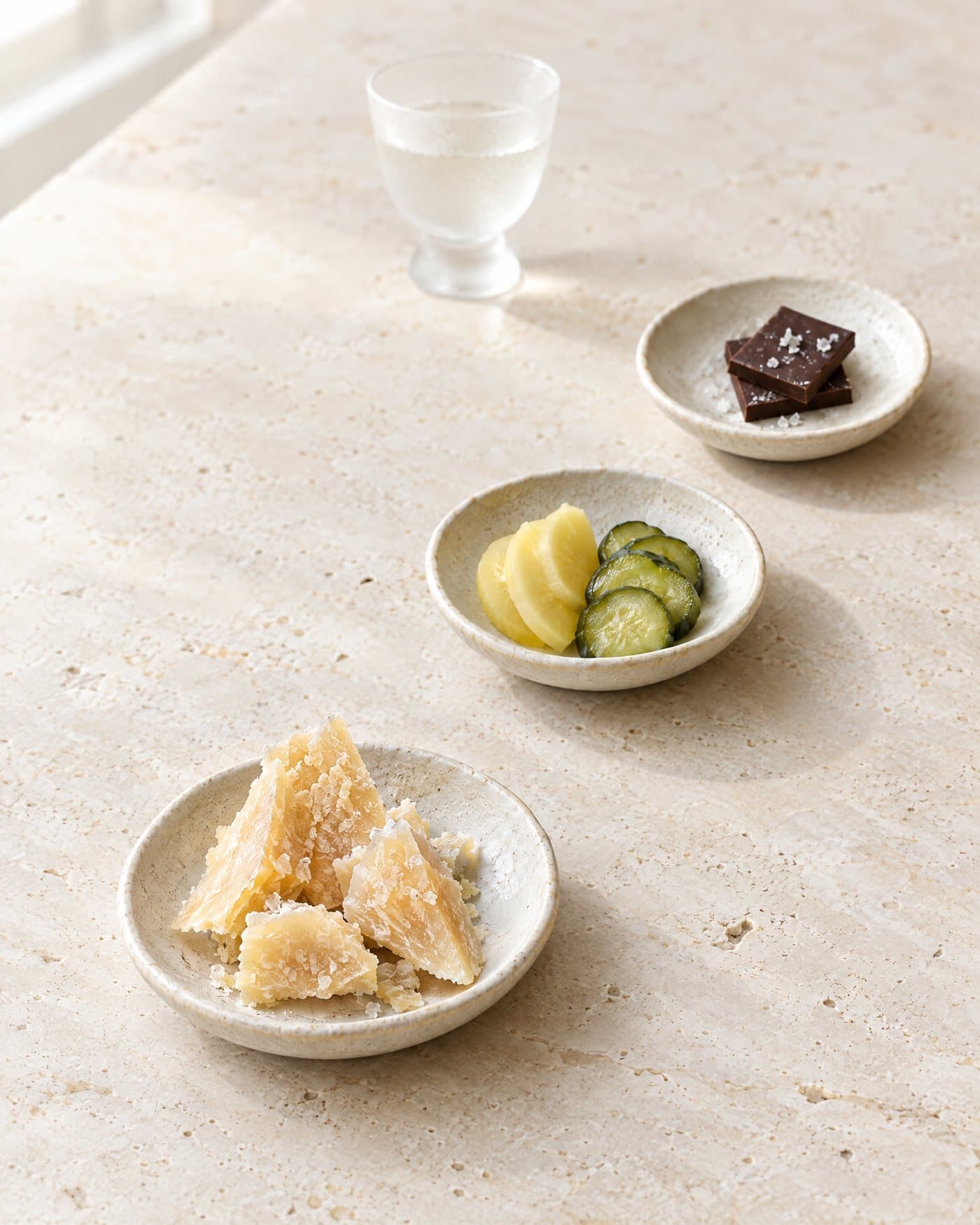
Aged hard cheese
Parmesan of thirty months or more, or an old Comté.
Long ageing builds in a cheese the savoury depth the spirit carries quietly, along with fat and salt. It is an echo on every count, and the clean finish keeps a rich cheese from cloying.
- How to pour
The Koyu serveNeat · 7°C
The cheese at room temperature, the glass at 7°C.
- 08Contrast
Japanese pickles
Daikon, cucumber, a little young ginger.
Contrast, plainly: acid, salt and crunch against a spirit that is soft and round. In a formal Japanese meal the pickles arrive at the end with the rice, and they do the same work here, clearing what came before so the finish reads clean.
- How to pour
The Koyu serveNeat · 7°C
A bite, then a sip.
- 09Contrast
Dark chocolate
Seventy per cent cocoa or more. One square, a few flakes of sea salt.
The least expected of the nine, and a contrast: bitter against buttery. Cocoa butter gives the two a texture in common, and a few flakes of salt tie the chocolate’s bitterness to the spirit’s clean finish.
- How to pour
Over iceOne large cube
Let the square melt first, then sip.
A last word
None of this is a rule. Keep the glass cool, the pour small and the plate good. The rest is your own palate.
Dietary note
Made with Wagyu tallow. Not suitable for vegetarians or vegans.